“Social cohesion is a foundation of our stability. It relies on our capacity to live together in peace, solidarity, and mutual respect, within a rich and demanding diversity. Preventing conflicts, strengthening dialogue between youth, authorities and traditional leaders, building trust in institutions, and promoting the inclusion of women and vulnerable groups, these are the challenges we must confront. And it is the youth who must, through their commitment, become the driving force behind this effort.”
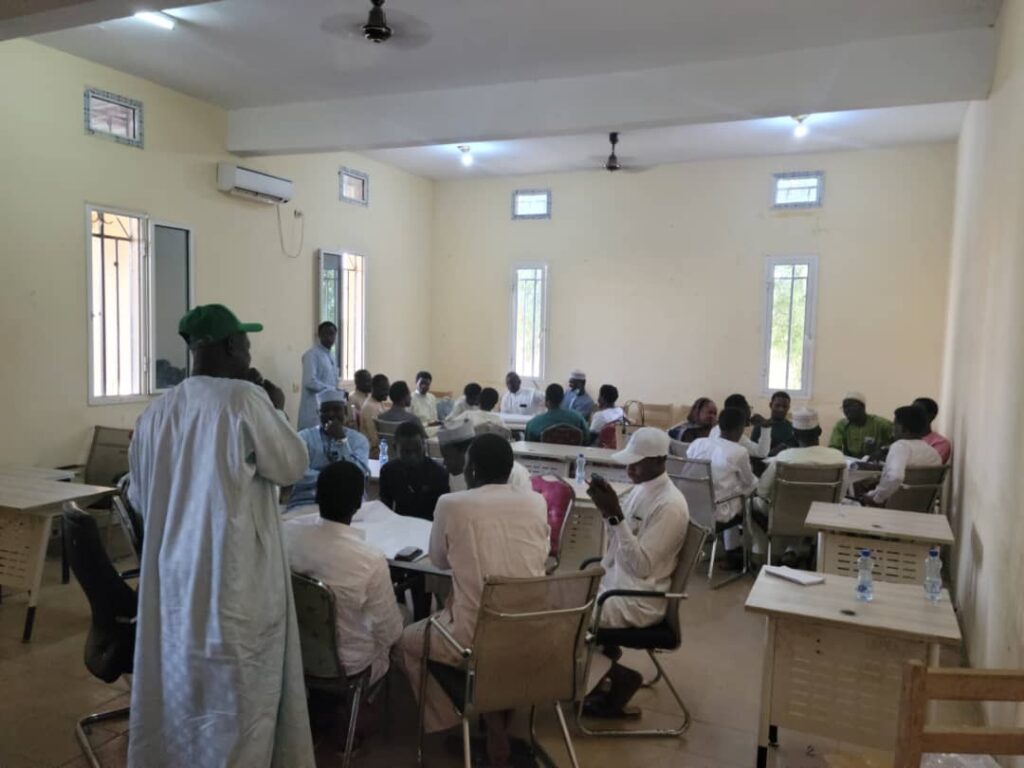
These were the words Mr. Brahim Adoum, the Ouaddaï Provincial Delegate for Youth and Sports, used to open the focus group discussions on social cohesion in Abéché, reminding participants that this concept is not a catch phrase, but a condition for collective survival.
Social cohesion is not merely the absence of violence; it is also reflected in how included people feel in social, economic, and political life. The focus groups held in Abéché (Ouaddaï), Guelendeng (Mayo-Kebbi Est), and Sarh (Moyen Chari) reveal just how fragile this cohesion is. It is undermined by gender inequalities, declining trust in institutions, and deep-rooted perceptions of social injustice.
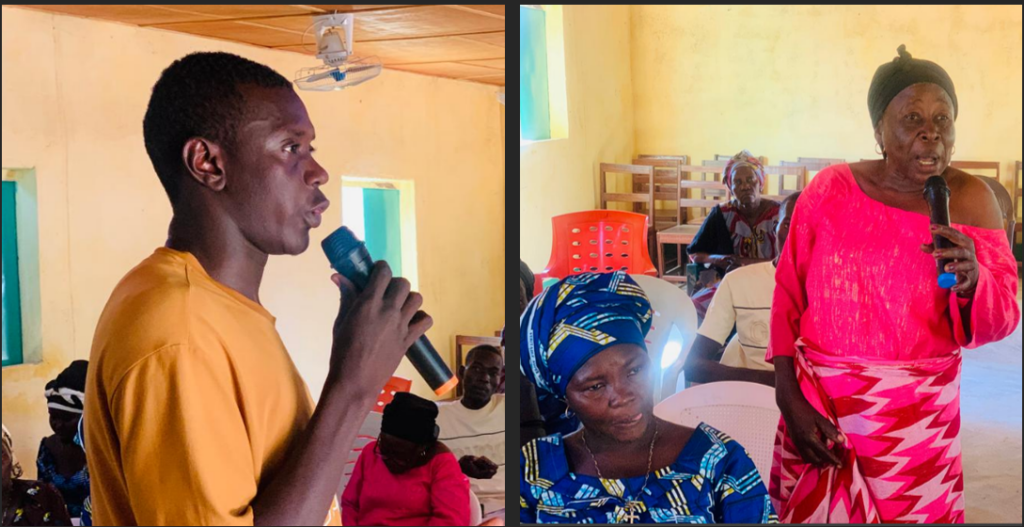
In Guelendeng, the image is striking. Women sitting apart, explain that they are invited to activities without being allowed to decide. Their presence is showcased, yet their influence remains minimal – demonstrating that social cohesion cannot be genuine if inclusion stops at symbolic representation. Genuine inclusion requires spaces where women have a real voice, real influence, and real power, and where gender norms no longer act as barriers.
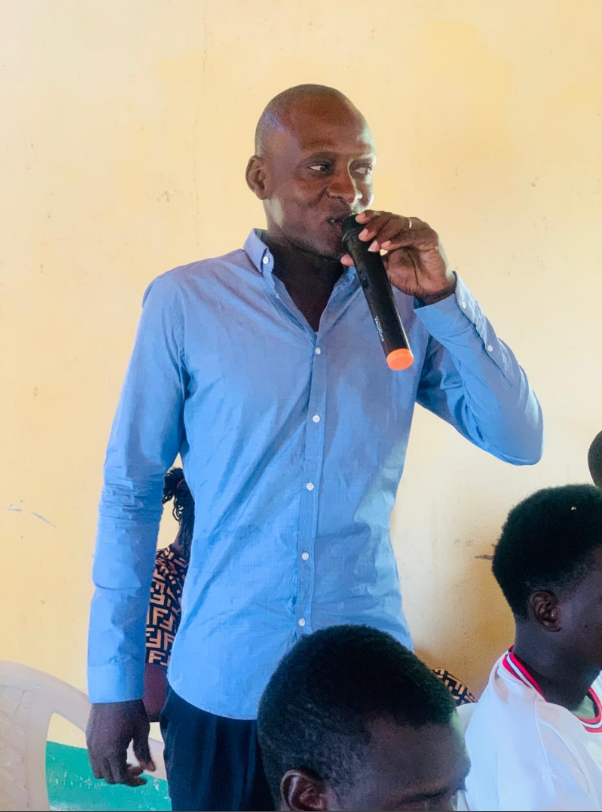
In Sarh, the fracture is different: citizens no longer feel connected to national life. Politics appears distant, as if it belongs to elites and institutions far removed from their daily lives. This distance is not neutrality; it is a sign of civic disengagement. When people cease to believe that their voices matter, social cohesion quietly erodes, giving way to resignation, detachment, and at times, diffuse forms of contestation.
In Abéché, young people are caught in a web of vulnerabilities. They describe a daily life marked by unemployment, precariousness, insecurity, community tensions, moral decline, alcohol abuse, toxic social media, and corruption. The diversity of these challenges reveals a cohesion weakened by economic hardships, competing identities, and a deep sense of injustice. When asked, “What still holds us together?”, participants struggled to answer. This question lies at the heart of the future of living together.
Across Guelendeng, Sarh, and Abéché, three major fractures emerge: the superficial inclusion of women, who remain at the margins of decision-making; a widening gap between citizens and institutions, marked by civic disengagement; and the cumulative vulnerabilities of frustrated young people with limited opportunities or recognition. Together, these perspectives reveal a simple truth: social cohesion in Chad remains something that must be intentionally constructed through shared effort. This requires rethinking participation so that women, youth, and marginalized groups can genuinely influence local and national decisions; re-establishing spaces where citizens are heard and where public action responds to their priorities; and addressing the root causes of frustration, including inequality, unemployment, opaque governance, and social exclusion.
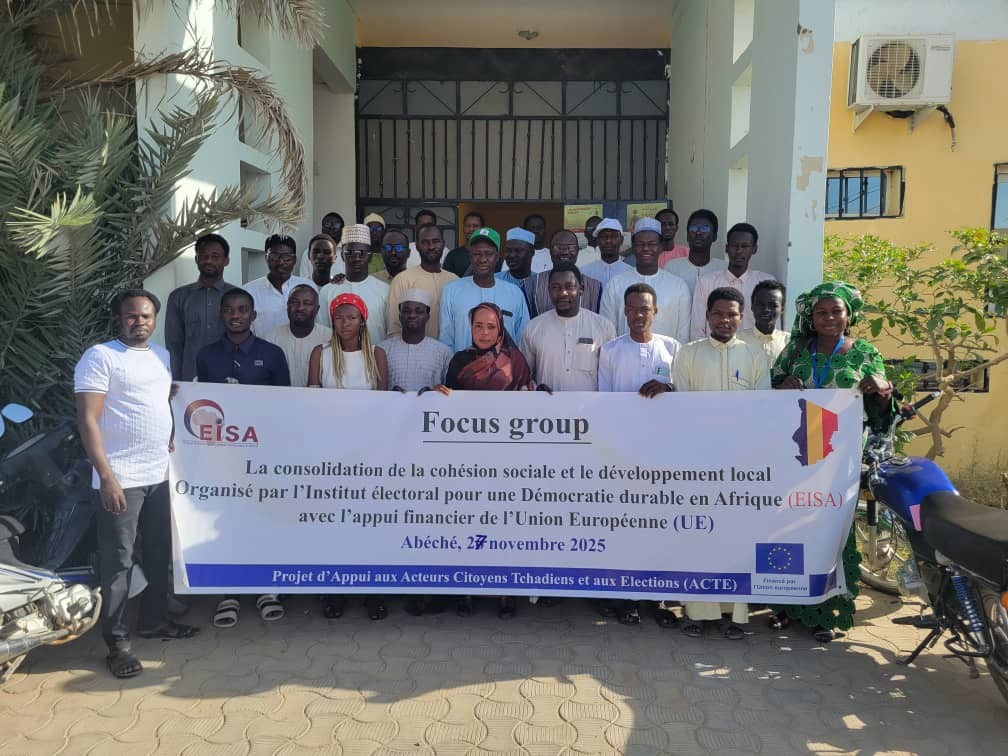
The focus groups held on November 25; 26 and 27, 2025, in Guelendeng, Sarh, and Abéché reveal a country where cohesion exists but wavers; where citizens long to be heard; and where youth, if placed at the center, could become the backbone of a new social contract.
Social cohesion in Chad is both an urgent priority and a long-term undertaking. It requires combining inclusion, justice, and genuine political participation, a necessary condition to transform living together from a slogan into a daily reality. By offering a space for expression to populations often left on the margins, EISA has helped rebuild trust between men, women, youth, and institutions, and has sketched the foundations of a more just model of local development rooted in listening, dialogue, and civic engagement.
This blog post was made possible thanks to financial support from the European Union under grant agreement No. NDICI AFRICA/2022/435-927. The opinions expressed here are those of the authors and do not necessarily reflect the views of the EU.
Dr Pierre Soussou is EISA’s Chad Country Representative