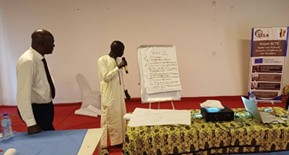
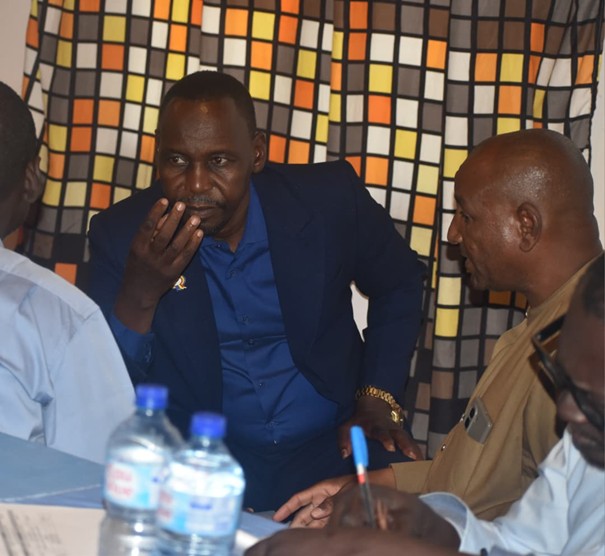
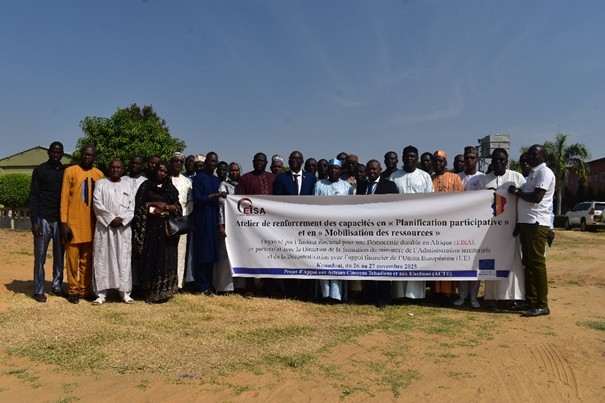
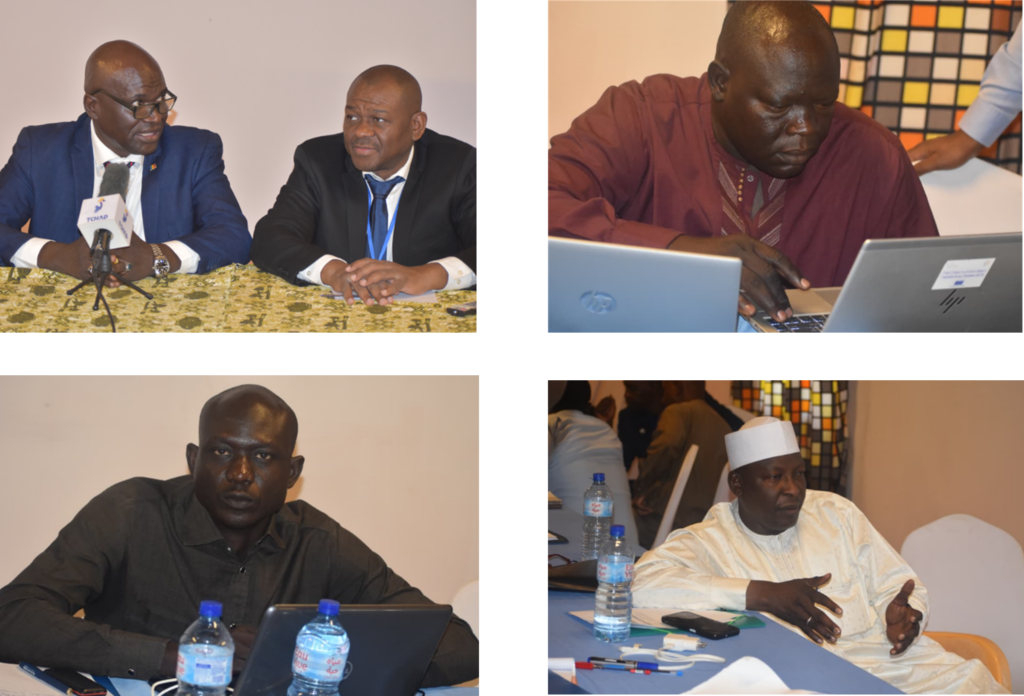
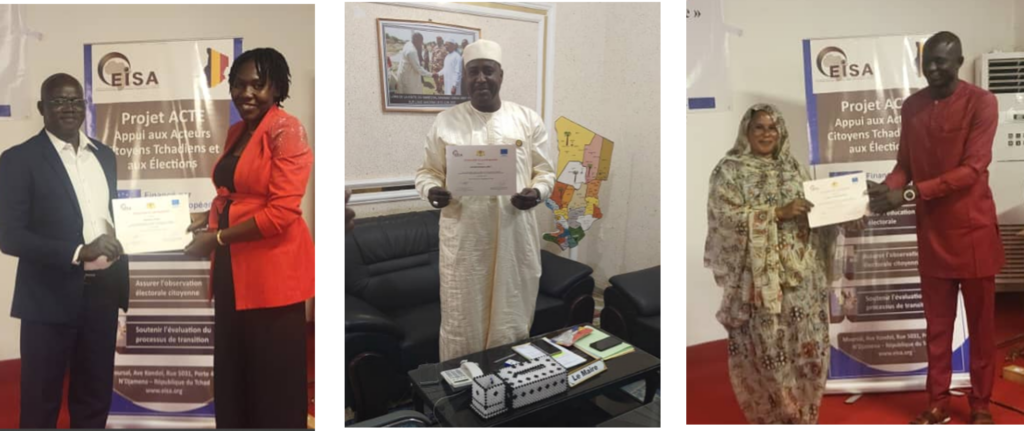
The shift to a decentralized system of governance in Chad is progressing well as people continue to learn through trial and error and make the necessary gradual adjustments. It is precisely in this learning process that its promise takes shape. The dual training sessions on participatory planning and local resource mobilization, organized by EISA, in collaboration with the Training Directorate of the Ministry of Territorial Administration and Decentralization, in N’Djamena on 26–27 November and 3–4 December 2025, offered a vivid illustration of this.
For four days, mayors, municipal secretaries general and delegated administrators considered theory against practice, and laws against local realities. The challenge was to understand how to turn decentralization into concrete action that serves citizens.
On paper, communes operate under a detailed legal framework including the Constitution, Organic Laws 014, 022, 028, and numerous budget circulars. These are intended to define their powers and autonomy. In practice, this legal corpus often resembles a labyrinth where it is difficult to know who does what, with what means.
Planning with citizens: a collective learning process
The first part of the training focused on participatory planning which entails mastering a new logic and terminology. How can local authorities involve residents in setting priorities when public meetings are scarce and territorial diagnoses poorly documented? Through group exercises, participants experimented with how to analyze community needs, collectively rank priorities (water, roads, employment, waste management), and link them to budget lines often expressed in technical jargon.
Discussions revealed very concrete challenges, for example, budgets prepared without real involvement of elected officials, confusion between deconcentration and decentralization, and limited understanding of fiscal autonomy. Many discovered that municipal budgets often function more as compliance tools than as instruments of governance. These exchanges also underscored that citizen participation cannot be decreed; it must be built patiently through dialogue and the gradual involvement of communities in decisions that affect their lives.
Mobilizing resources without losing trust
The second session, focusing on local revenue generation, raised equally complex issues. How can local taxes and fees, often poorly understood or collected informally, be applied in a fair and transparent manner? How can local governments convince taxpayers, many already struggling with poverty and high living costs, that these revenues are essential for basic services?
Through simulations and revenue mapping exercises, participants recognized both the limits of fiscal autonomy and the room for improvement in areas such as the securing of financial flows, making collection processes more transparent, and communicating more effectively with citizens.
Learning to govern together
The training sessions highlighted the complexity of the work of Chad’s local officials. These officials are immersed in a dense and shifting regulatory environment where they must simultaneously learn law, public management, political communication, and social mediation. Yet behind these challenges lies a promising dynamic of adaptation and learning.
Some elected officials are starting to master the vocabulary of participatory planning; technical staff are becoming interpreters between policy and practice; and several teams are discovering that a budget can serve not just as a constraint, but as a strategic governance tool.
The N’Djamena experience underscores an essential truth: decentralization in Chad will only make sense if local authorities can translate a complex legal framework into decisions that are clear, negotiated, and understood at the local level. As long as regulations are seen as a burden rather than a framework for action, the risk of a cosmetic decentralization remains. But if this momentum is sustained through methodological support, clearer rules, and regular dialogue between the State and communes, these workshops could mark a turning point toward a more genuine, living, and citizen driven decentralization process.
Beyond the training itself, the N’Djamena workshops reflected a shared conviction: decentralization is not merely an administrative reform; it is a collective exercise in learning how to govern locally. The exchanges between elected officials, technical staff, and trainers showed that by investing in capacity building, Chad is also giving substance to a democratic promise – that of institutions closer to the people, more accountable, and more responsive to citizens’ needs.
These training sessions were particularly meaningful for local elected officials, providing a valuable space for learning and exchange. Honorable Adoum Hassan Djimet, mayor of the 7th district, expressed this in a simple yet telling gesture: at the end of the training, he took a photo with his certificate and shared it on the local officials’ WhatsApp panel created to continue the dialogue.
This blog post was made possible thanks to financial support from the European Union under grant agreement No. NDICI AFRICA/2022/435-927. The opinions expressed here are those of the authors and do not necessarily reflect the views of the EU.