Where We Work.
Chad
Where We Work.
Chad
Chad is a landlocked country between Cameroon, Libya, Niger, Nigeria, the Central African Republic and Sudan. Its political history since independence on August 11, 1960 has been marked by a succession of deadly confrontations between Chadians, constitutional instability, and contested or boycotted electoral processes. After the death of President Idriss Deby on April 18, 2020, a transitional period began with a government open to several political components.
This government is working to implement a process that will lead to the drafting of a new constitution and a new legal and institutional framework for elections as a prerequisite for holding democratic elections.
Such a venture needs to be backed up and supported by technical and financial partners, with a focus on civil society, which has an important role to play not only in monitoring the electoral process, but also in raising awareness among the population for inclusive, transparent and peaceful elections. In this perspective, EISA, which supported the Chadian electoral process from 2009 to 2013, is back with the project to Supporting Chadian Citizens and Elections – Appui aux Acteurs Citoyens Tchadiens et Aux Élections (ACTE).
The project ACTE aims at
providing citizen actors with the tools and technical support necessary for an electoral process that restores the legitimacy of the authorities as well as the confidence of the voters and that contributes to anchoring democratic values, good governance and respect for fundamental rights and freedoms.
Duration: 2 years from September 2022 to September 2024.
The area of focus: Elections Observation, Civic Education, Advocacy, Capacity Building
Donor: European Union
Our Goal.
Promote an active role for civil society organizations in monitoring the post-transition electoral process, with a view to inclusive, transparent and peaceful elections.
Project Objectives
This goal will be achieved through 2 intermediate results (IR):
IR 1
Strengthen the capacities of citizen actors in order to develop and implement a strategy of civic and electoral education, voters’ mobilization and dissemination of fundamental elections related legal texts.
IR 1
Strengthen the capacities of citizen actors in order to develop and implement a strategy of civic and electoral education, voters’ mobilization and dissemination of fundamental elections related legal texts.
IR 2
Strengthen the capacities of CSOs to enable them to develop an adequate mechanism for citizen observation of the constitutional referendum as well as the presidential and legislative elections at the end of the Transition.
IR 2
Strengthen the capacities of CSOs to enable them to develop an adequate mechanism for citizen observation of the constitutional referendum as well as the presidential and legislative elections at the end of the Transition.
The action will assess various steps of the transitional process various steps including the Inclusive National Dialogue, the Drafting of the new Constitution and the revision of the legal electoral framework in Chad. It will take into account cross-cutting issues, such as human rights respect, gender mainstreaming, inclusion of minorities and internally displaced persons, in order to contribute to the reduction of discrimination and to promote the inclusion and participation of all in the political and electoral process.
Networks & Partners
Alliance Citoyenne pour les Elections au Tchad – Citizen Alliance for Elections in Chad (ACET), formerly identified as Coalition Indépendante pour les Elections Libre – Independent Coalition for Free Elections (CIEL).
Latest News
CategoriesChad Electoral Reforms Cafés: CRET’s Citizen-Focused Approach
Introduction In his interview at the Ciné Droit Libre festival, Théophile Obenga, one of Africa’s leading intellectuals and a key…
CategoriesChad Decentralization in Chad: When Local Governments Learn to Exercise Power
The shift to a decentralized system of governance in Chad is progressing well as people continue to learn through trial…
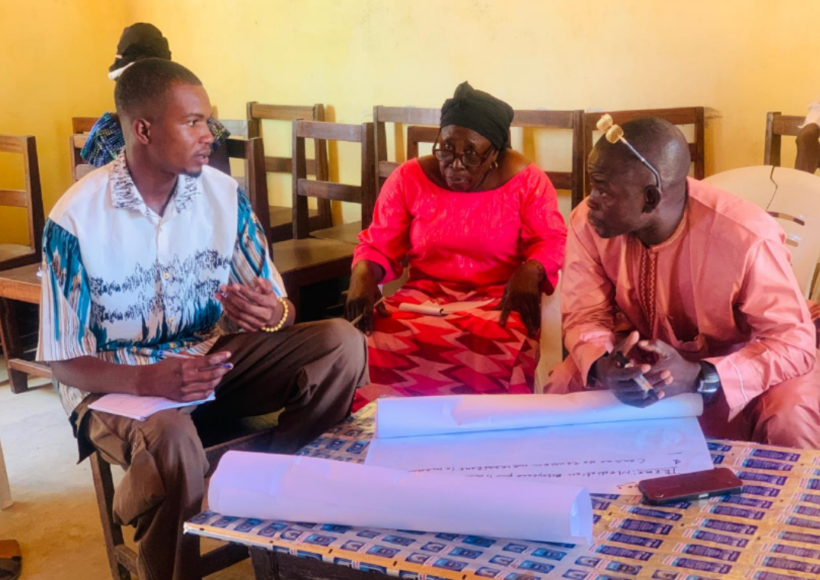
CategoriesChad Social Cohesion and Local Development: A Collective Commitment for the Future
“Social cohesion is a foundation of our stability. It relies on our capacity to live together in peace, solidarity, and…
Publications
This paper examines doubts about electoral integrity in African countries. We focus on the supporters of losing candidates and build on growing research on this topic from other contexts. Our cross-national analysis shows that cues by elites regarding a contest significantly shape the perceptions of their supporters. Where losing candidates reject an election result, their supporters are highly likely to question the integrity of the election. This is true even when controlling for the freeness and fairness of the election as assessed by international observers. Overall, the results suggest that losing candidates have substantial ability to shape the stability of democratic rule.
The paper focuses on the electoral process that was undertaken to finish the transition in Chad, which is the only Sahel state to have held elections after a putsch. The president is now internationally recognised as the elected president, and the transition is complete. At the same, time human rights violations and the lack of democracy are obvious in all decisions – yet these issues do not receive comment by the international community.
Our Team