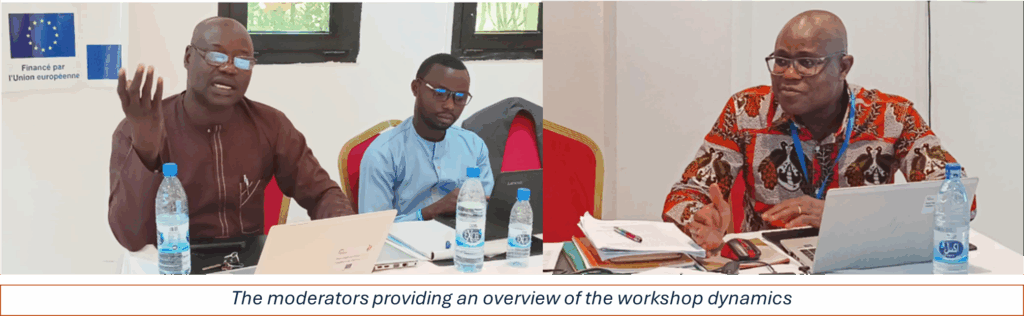
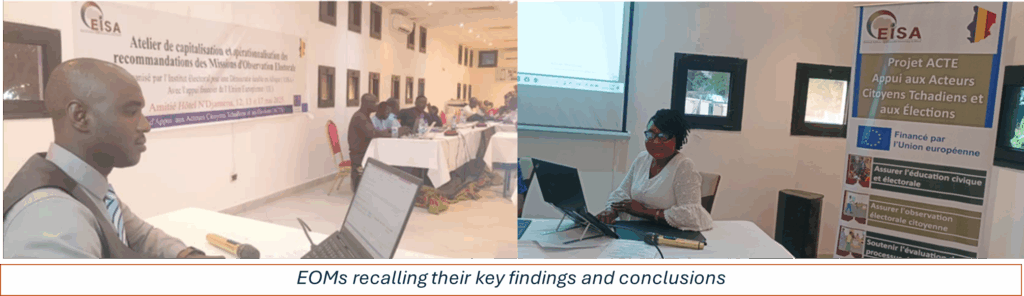
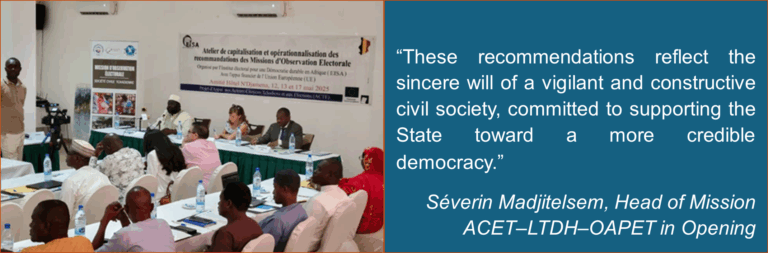
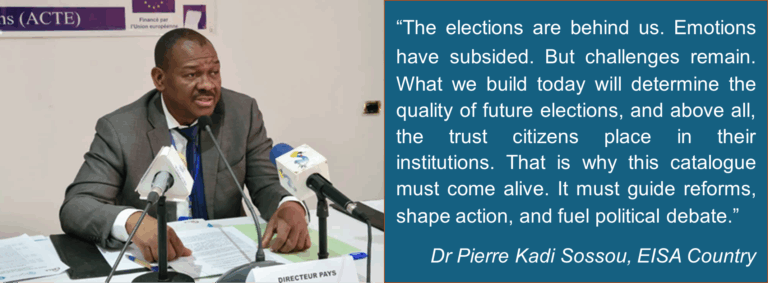
For the first time in Chad’s electoral history, the main citizen electoral observation missions (EOM) have joined forces around a shared goal: to collectively lay the groundwork for recommendations aimed at sustainably improving the country’s electoral and institutional processes.
A landmark workshop was held in N’Djamena on 12, 13, and 17 May 2025, marking a key moment for consolidating and operationalizing the recommendations that emerged from the 2023–2025 electoral cycle. This EISA initiative brought together civil society observer groups who had observed one or more of the country’s electoral processes, be it the referendum, presidential, legislative, municipal, provincial, or senatorial elections
The ambition was high: to bring together diverse perspectives, compare findings, harmonize analyses and, most importantly, reach a common ground. Mission accomplished. Nineteen member organizations of the EOMs united their voices to produce 64 joint recommendations. A significant achievement in a context too often marked by political divisions and mutual distrust.
The recommendations are structured around five major strategic areas:
Legal and institutional reforms.
Electoral operations and procedures.
Media, social networks, and public space regulation.
Civic education and promotion of a peaceful climate.
Inclusion of women, youth, and persons with disabilities.
The resulting catalogue, the product of careful collective work, is more than a technical document. It is a call to action, a tool for advocacy and a foundation for dialogue between citizens, institutions, and partners.
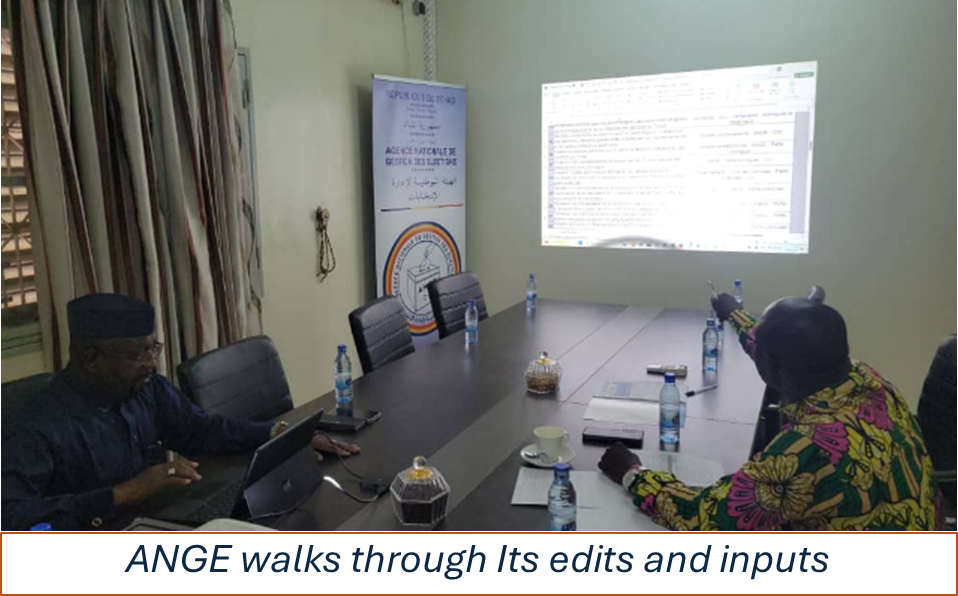
The National Agency for the Management of Elections (ANGE), a central actor in organizing the electoral process, welcomed the initiative, actively contributed to reviewing the catalogue and expressed its desire to be more prominently featured in the recommendations, particularly regarding transparency, organization, and inclusivity
The Constitutional Council, guardian of the rule of law, shared its own insights regarding the regulation, adjudication, and interpretation of electoral norms.
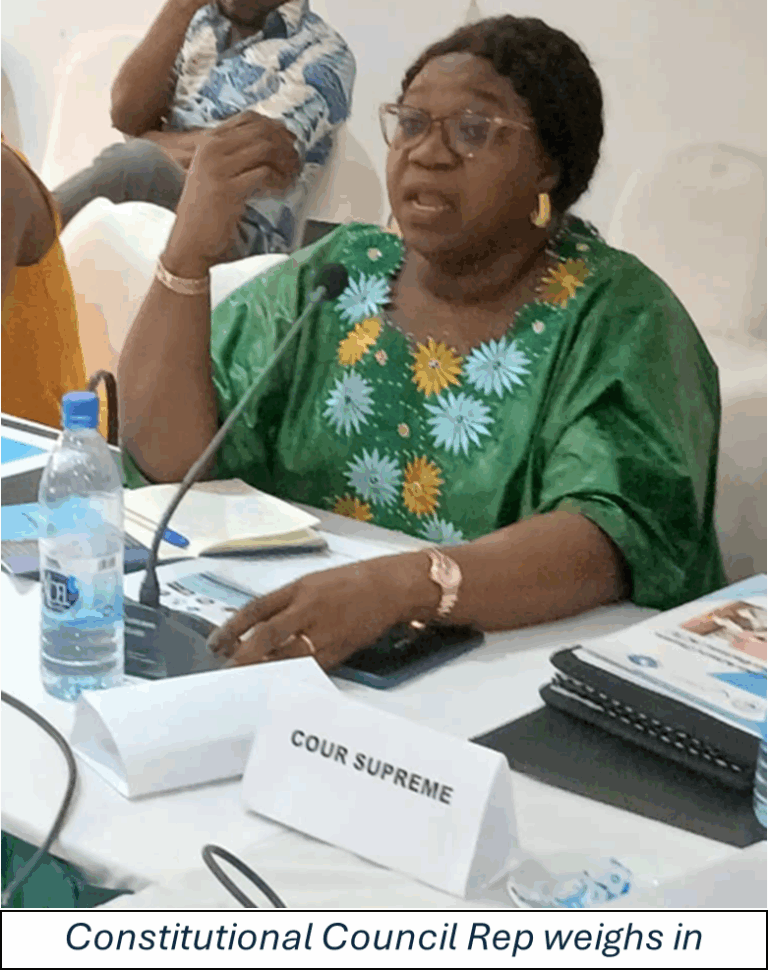
The Supreme Court, responsible for local electoral disputes, submitted its own set of recommendations, filling the gap left by the initial version.
The High Authority for Media and Audiovisual (HAMA), for its part, drew a clear line between the recommendations falling under its jurisdiction and those that more appropriately concern the National Authority for Securing State Communication Infrastructure (ANSICE), a move that improves the clarity of institutional responsibilities.
Political parties, while regretting that they were not involved earlier in the process, have expressed readiness to champion the recommendations in Parliament and promote them at the grassroots level by fostering dialogue, civic participation, and youth and women’s engagement.
Parliamentarians, both deputies and senators, now hold the legislative lever needed to turn these proposals into tangible reforms. Their involvement is key to ensuring implementation.
Finally, financial and technical partners, including the European Union, the United Kingdom, and the Netherlands, acknowledged the urgency of moving beyond an event-based approach to invest in the post-electoral phase, focusing on deep structural reforms, support for decentralization, and strengthening institutions between electoral cycles.
The consensus reached in N’Djamena presents a rare opportunity. It offers a chance to build a stronger, more inclusive, and more credible democracy. It is now up to all stakeholders, ANGE, the Constitutional Council, the Supreme Court, ANSICE, HAMA, political parties, parliamentarians, civil society organizations, and development partners, to take ownership of this work and turn it into the foundation for a new chapter in Chad’s democratic journey.
This blog post was made possible thanks to financial support from the European Union under grant agreement No. NDICI AFRICA/2022/435-927. The opinions expressed here are those of the authors and do not necessarily reflect the views of the EU.